The current GPU shortage is not simply a story about one graphics card becoming expensive. For a Box Build project, RTX 5090 sourcing can change the approved SKU, BOM cost, warranty path, delivery date and even the system validation plan. A September 7, 2026 price snapshot shows Founders Edition listings near NVIDIA’s launch price but sold out, while in-stock add-in-board models were listed far higher. The practical response is to control the exact part, seller, serial record and responsibility for defective material before purchase.
What Changed in RTX 5090 Channel Pricing in September 2026?
Availability and price diverged sharply by channel and model. The table below is a dated snapshot, not a universal market average. It separates the region, seller, exact SKU or manufacturer code, observed availability and price reference so that unlike products are not presented as one interchangeable quote.
| Region and observation date | Channel and exact item | Observed price and status | Reference gap |
|---|---|---|---|
| United States, Sep. 7, 2026 | NVIDIA Marketplace, GeForce RTX 5090 Founders Edition, MPN NVGFT590 | $1,999.00; out of stock | NVIDIA’s US launch starting price was $1,999, so the listing itself showed no material premium but could not be ordered. |
| United States, Sep. 7, 2026 | Best Buy, Founders Edition, model 900-1G144-2530-000, SKU 6614151 | $1,999.99; sold out | $0.99 above the US launch reference, again without orderable stock. |
| United States, Sep. 7, 2026 | Newegg, MSI RTX 5090 32G GAMING TRIO OC, item 14-137-919 | $4,699.99; listed in stock | $2,700.99, or about 135%, above the US Founders Edition launch reference. This is an AIB model, not a like-for-like FE comparison. |
| United Kingdom, Sep. 7, 2026 | Scan, MSI RTX 5090 32G GAMING TRIO OC, scan code LN155275 | GBP 4,679.99; listed in stock | GBP 2,740.99, or about 141%, above NVIDIA’s UK launch starting price of GBP 1,939. Taxes and SKU differences prevent a direct cross-region margin comparison. |
The same MSI manufacturer code appeared in both the US and UK samples, but the currencies, tax treatment and local warranty terms differ. The Founders Edition rows are useful MSRP references, not substitutes for the MSI model. This distinction matters because a headline such as “RTX 5090 costs more than twice MSRP” can mix model premium, channel margin, tax, availability and shortage effects into one number.

Why the MSRP-to-Market Gap Is Not One Number?
The MSRP-to-market gap must be calculated for a defined region, SKU and date. A Founders Edition launch price is not the normal selling price of every factory-overclocked card. AIB cooling, PCB design, power limits, bundled support, taxes and seller terms can all change the price before shortage pressure is considered.
For that reason, we do not use the claim that the RTX 5090 “rose to $6,000” as a general fact. Some search results and marketplace ranges may display figures at or above that level, but those observations do not establish a representative transaction price. A purchasing record should instead preserve the actual seller quote, timestamp, manufacturer part number, quantity, delivery promise and warranty owner.
How a GPU Shortage Changes Box Build Procurement?
A GPU shortage changes Box Build procurement by turning one BOM line into a project-level schedule and liability decision. If the approved GPU cannot be obtained at the planned price, purchasing cannot safely substitute any card carrying the same chipset name.
- BOM control: Lock the full manufacturer part number, memory configuration, dimensions, power connector and approved revision, not only “RTX 5090.”
- Quote validity: Separate the GPU material price from assembly and test charges, and give the volatile item its own validity period.
- Alternate approval: Define whether another AIB brand or cooler design is allowed before material is released.
- Mechanical and thermal recheck: A substituted card can change slot width, length, cable clearance, airflow and system power requirements.
- Schedule logic: Tie the Box Build start date to confirmed material receipt and inspection, not to an unverified marketplace delivery estimate.
This approach prevents an apparently available card from creating a later enclosure, cable or functional-test failure. It also makes the commercial decision visible: the customer can accept a documented premium, approve an alternate, supply the material or wait for the locked SKU.
What Component Traceability Should Cover for a High-Value GPU?
Component traceability for a high-value GPU should connect the approved BOM line to the physical unit installed in each finished system. A seller’s product title alone is not sufficient evidence.
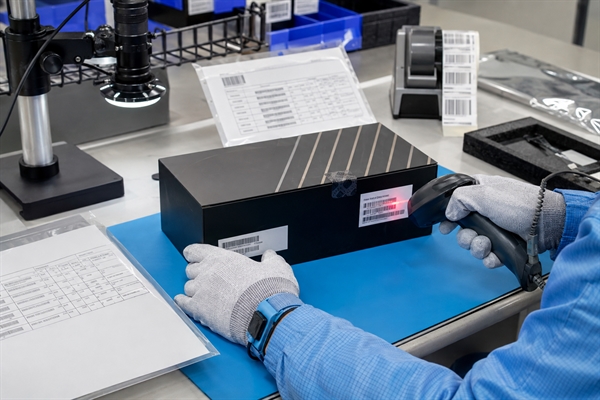
- Record the manufacturer part number, seller part number and purchase order.
- Retain invoices, packing lists and the seller’s warranty terms.
- Capture carton, product and serial identifiers before kitting.
- Inspect packaging condition, tamper evidence, connector condition and visible serial consistency.
- Keep a unit-to-system serial mapping when the customer’s service process requires it.
- Quarantine mismatched, damaged or unverifiable units instead of releasing them to assembly.
Traceability cannot by itself prove that every internal semiconductor is genuine, but it preserves the evidence needed to investigate a discrepancy, identify the affected systems and pursue the correct supplier or warranty channel.
Where Warranty Responsibility Can Break?
Warranty responsibility can break when the purchaser of record, installation provider and end customer are different parties. A regional retailer may only accept returns from the original purchaser or within the original sales territory. A marketplace seller may provide terms that differ from the GPU brand’s own RMA process.
Before purchase, the project should state who owns the supplier account, who can initiate an RMA, where the unit must be returned, which shipping costs are covered and what happens if a card is dead on arrival. The assembly provider should also define which failures are attributable to supplied material and which are attributable to integration workmanship. Without that split, an expensive unit can sit in quarantine while every party assumes another party owns the claim.
How to Control Customer Supplied Material?
Customer supplied material can reduce sourcing exposure when the customer has an approved channel or allocation, but it transfers new controls into receiving and production. Consignment does not mean that responsibility is undefined.
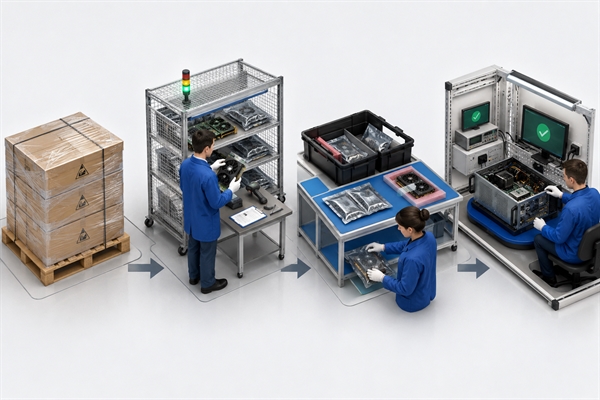
- Agree the handoff record. Define part number, quantity, value declaration, expected serial data and packaging condition.
- Inspect at receipt. Count units, photograph damage, check identifiers and report discrepancies before opening production kits.
- Set storage and access rules. Use ESD protection, controlled locations and a transaction record for each issue and return.
- Define attrition and DOA treatment. State whether spare units are provided and who authorizes replacement material.
- Map material to finished systems. Preserve the serial relationship when required for warranty or field service.
These customer supplied material controls protect both parties. They do not turn incoming inspection into a guarantee of semiconductor authenticity, and they do not make the assembler responsible for a supplier warranty that the assembler cannot access.
What to Lock Before Releasing a Box Build Order?
A Box Build release should lock the commercial and engineering assumptions affected by the GPU before purchasing begins. The surrounding electronics still need their own controlled manufacturing route.
| Release item | Required decision | Why it matters |
|---|---|---|
| Approved GPU | Exact manufacturer part number and permitted alternates | Prevents an unreviewed cooler, connector or power change. |
| Commercial basis | Seller, region, quantity, price timestamp and quote validity | Makes the premium and availability assumption auditable. |
| Warranty owner | Buyer of record, RMA route and DOA responsibility | Avoids an unresolved claim after integration. |
| System inputs | Chassis clearance, PSU, cable, airflow and test load | Confirms that the selected card can be integrated safely. |
| Material model | Full turnkey, partial turnkey or consignment | Defines who purchases, inspects and replaces the GPU. |
For the custom electronics around the GPU, our PCB assembly service can support SMT, through-hole, mixed assembly and functional testing. We can also manufacture the project’s FR4 control and I/O PCBs, while high-Tg PCB construction is available when the surrounding board design and operating temperature justify it. These services do not mean that we manufacture the GPU or hold RTX 5090 stock.
How We Support GPU-Equipped Box Build Projects?
At EBest Circuit (Best Technology), we support full-turnkey, partial-turnkey and consignment assembly models. For sourced components, our workflow includes BOM and material checks, incoming inspection, 3D SPI, AOI, X-ray where appropriate, functional testing and final inspection. Our published placement capability reaches 13,200,000 chips per day, subject to package mix, line loading and engineering review.
For an RTX 5090 project, our role is to help control the Box Build around the approved GPU: material records, kitting, PCB and PCBA production, cable and enclosure integration, assembly and agreed system-level tests. We do not state or imply that EBest Circuit (Best Technology) holds RTX 5090 inventory. Any GPU availability, channel price and warranty path must be confirmed for the specific order date and seller.
A Price Snapshot Should Trigger Controls, Not Panic Buying
The September 7 snapshot shows why a GPU shortage should be managed with evidence rather than a single viral price. Separate the exact SKU from the chipset name, preserve the region and timestamp, confirm component traceability, and assign warranty and customer supplied material responsibilities before release. For support with a GPU-equipped Box Build project, contact sales@bestpcbs.com.
Tags: Box Build procurement, component traceability, customer supplied material, GPU shortage, RTX 5090 sourcing
PakarPBN
A Private Blog Network (PBN) is a collection of websites that are controlled by a single individual or organization and used primarily to build backlinks to a “money site” in order to influence its ranking in search engines such as Google. The core idea behind a PBN is based on the importance of backlinks in Google’s ranking algorithm. Since Google views backlinks as signals of authority and trust, some website owners attempt to artificially create these signals through a controlled network of sites.
In a typical PBN setup, the owner acquires expired or aged domains that already have existing authority, backlinks, and history. These domains are rebuilt with new content and hosted separately, often using different IP addresses, hosting providers, themes, and ownership details to make them appear unrelated. Within the content published on these sites, links are strategically placed that point to the main website the owner wants to rank higher. By doing this, the owner attempts to pass link equity (also known as “link juice”) from the PBN sites to the target website.
The purpose of a PBN is to give the impression that the target website is naturally earning links from multiple independent sources. If done effectively, this can temporarily improve keyword rankings, increase organic visibility, and drive more traffic from search results.