If you have seen a coding program for children at all, you may have heard about the MIT coding platform called Scratch. This is a very popular block coding device that is popular, with more than 200 million students using it over the past year and project bills are made. With so many students who use this tool, you might ask questions: What class level? The short answer is, the initial coding is suitable for almost all students in the K-10 class. However, it depends on the age group, the specific version from the start to use and how much time to be spent at the beginning of a variety. We will be described below.
Jump directly to the initial learning with direct expert instructions, and the award winner curriculum designed by experts from Google, Stanford and MIT:
For what class level?
There are two different initial tools, each targeted in different age ranges. Scratch Jr. is for pre-TK class students to first grade, temporarily Scratch targeted mainly in grades 2 to 8 students. Both tools use block -based programming languages, but Scratch JR has a simpler block for younger readers. Scratch has a more sophisticated concept of coding too. It should be noted that this range is not a hard cutoff, because advanced young students may be able to start with the beginning with the beginning, and high school students without previous experience can take advantage of learning learning based on early blocks as well. With these tools, students can make their own programs, games, and animation.
Scratch is the most suitable for this younger age range or those who have no coding experience because they use block -based coding, which is contrary to text -based coding. Text -based coding language has a complex syntax that is difficult to understand by beginners, which can cause unnecessary frustration. Some students may not have typing skills needed for text-based coding, but by using a block code, students can focus on basic concepts such as conditional logic, variables, functions, and more.
All of these skills will be transferred to text -based language like Python when they are old enough to use them effectively. If you are still not sure whether your child should take a scratch or a receding snake, see this article. This visual must also help you choose the right language to start your students on their coding adventure.
Start with free scratch
Scratch and Scratch JR both are 100% free to use because they are supported by Donation to the initial foundation. Students will have full access to all the initial features (without advertisements) forever! Scratch Jr. is a cellular application while the beginning is accessed better through the desktop.
Help your students set their initial coding accounts for free by following these simple steps:
- Open the scratch website to your web browser.
- Click Join the beginning in the upper right corner.
- Create a username. Remember that if you choose to share your project, other people can see your user name.
- Make a password. Make sure your password is unique and difficult to guess. We don’t want you to lose your hard work.
- Click Next. Questions will appear asking about your location, date of birth, gender, and email address.
If you want a more comprehensive guide to create an initial account, see our article about the four steps to start the beginning.
Code method at the beginning
Then it’s time Start coding with the beginningLai
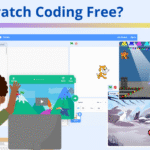
- Click the button in the top left corner of the home screen. This will create a new project.
- To start coding, drag the block from the toolbar and install together to create a program. All codes need to have one of the event blocks to start. It is recommended to use the “When Green Flag” block to start the code when you click Start! There are other blocks for different functions, such as controlling character movements or playing sound.
- To test your code, click the Green Flag button in the top right corner of the stage. This will run your program and show you how it looks and behaves.
The following is a brief picture of each category of scratch blocks:
- Block Motion (Blue): These blocks allow you to control the movement of sprite (character or object) on the stage. For example, you can use a motion block to make a sprite movement in a certain direction or go to a certain position.
- Visible block (purple): These blocks allow you to change the appearance of the sprite, such as by changing the costume or size.
- Sound block (pink): This block allows you to play sound or music in your program. You can also manipulate sound property, such as changing volume.
- Block (yellow) event: These blocks allow you to arrange events that trigger your program to run, such as when the green flag is clicked or when certain buttons are pressed.
- Control block (tangerine): These blocks allow you to control the flow of your program, such as by repeating the code section or stopping the program.
- Sensing Blocks (Teal): This block allows you to create a program that responds to input from the user or environment. For example, you can use sensing blocks to check whether the mouse is clicked or if the sprite touches another sprite.
- Operator Block (Green): This block allows you to perform mathematical operations or compare values in your program.
- Mathematical Operator Block (Green): This block allows you to perform mathematical operations or compare values in your program.
- Variable block (orange): These blocks allow you to create variables (names that can change) in your program and use them to store and manipulate data.
- My block (red): This category is empty. This is where students can make and store their own coding blocks, known as functions. This is a more advanced concept that they will not need until they are more experienced.
Explore the initial game
The best way to feel the initial coding is to get out and try it! For new coded students, we recommend handling this initial coding exercise first. Then, here are some examples of fun game tutorials to try:
- Make games at the beginning: This simple tutorial will guide you by creating your first game.
- How to make a sprite jump at the beginning: Learn how to make any character jump – features that you can add to any game or animation you want to make.
- Make the piano at the beginning: Like music? Give your hands to create your own music device that can be played online.
- For Mario games: Everyone likes this classic video game! Make your own variation.
- Catch the game on scratch: Make a fun catch game at the beginning with any character, and save the score!
For what class level?
Scratch is a fantastic free free block coding tool to introduce children to the basic coding concept. Students can have fun to channel their creativity into games and animations, while studying important coding skills. In general, children in Pre-K to grade 1 must use the initial JR, while those in grade 2 and above must use scratches. If Scratch seems to be an interesting tool that you want to try, register in a free Ninja Scratch Intro Course in Create & Learn, to learn from direct expert guidance and curriculum designed by professionals from Google, Stanford, and MIT!
Written by the Instructor for & Learning Dominic Occhietti. Dominic is a graduate of Michigan State University, where he studied music performances and computer science. He really enjoyed teaching, whether it was a coding class, French horns, or even SKI lessons declined!
Game Online
Motivation
News
Pendidikan
Pendidikan
Download Anime
Gaming Hub
Game online adalah jenis permainan video yang dimainkan melalui jaringan internet. Game ini memungkinkan pemain untuk berinteraksi dengan pemain lain secara real-time, baik itu dalam bentuk kerja sama, kompetisi, atau eksplorasi dunia virtual bersama-sama.